

The Oil Capital of the World Is Also Oklahoma’s Most Exciting City
There’s a version of Tulsa that exists only in the minds of people who’ve never been — flat, forgettable, somewhere between the Midwest and the South with nothing much to show for it. That version is hopelessly wrong.
The real Tulsa is one of the most architecturally striking cities in America, with one of the largest collections of Art Deco buildings anywhere in the world. It’s a music city that gave birth to the Tulsa Sound and inspired its own counterculture movement. It’s a food city that Bon Appétit has taken notice of, with a restaurant scene that keeps pace with cities twice its size. And it sits along the Arkansas River with trails, parks, and green space that make it genuinely livable in a way that surprises most first-time visitors.
Whether you’re passing through on Route 66, new to town, or simply looking for a weekend worth your time — here’s everything you need to know about Tulsa, Oklahoma.
A Bit of History
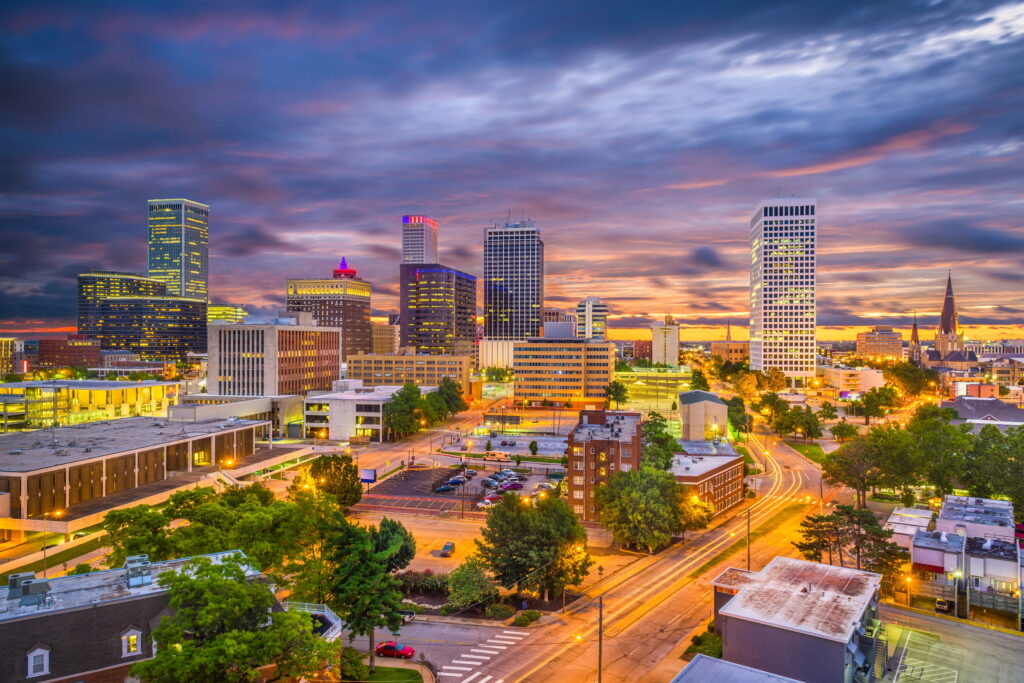
Tulsa’s story is inseparable from oil. The city exploded in the early 20th century after the 1901 Glenn Pool oil discovery, and for a time it was known as the “Oil Capital of the World.” The wealth that poured in funded some of the most lavish Art Deco architecture you’ll find anywhere: gleaming towers, ornate lobbies, and buildings that still define the downtown skyline today.
But Tulsa’s history has a darker chapter too. In 1921, the Greenwood District — known as Black Wall Street — was devastated in one of the worst incidents of racial violence in American history. Today, the city has worked to acknowledge and memorialize that history, and the Greenwood area has re-emerged as a vibrant cultural district with restaurants, museums, and gathering places that honor its legacy.
Tulsa has also long been a crossroads of Native American culture, sitting within the historic boundaries of the Creek (Muscogee) Nation. That heritage runs deep in the city’s museums, festivals, and communities.
Neighborhoods Worth Knowing
The Blue Dome District
Named for the distinctive sky-blue dome of a former White Star Gulf Oil Station, this is Tulsa’s go-to entertainment district. Think: live music venues, great bars, independent restaurants, and the energy of a neighborhood that actually gets going after dark. The Blue Dome is where you want to be on a Friday night.
The Brady Arts District
Anchored by the historic Cain’s Ballroom and the Woody Guthrie Center, the Brady Arts District is the cultural core of the city. Art studios share blocks with vinyl record shops, independent bookstores, and some of Tulsa’s most-talked-about restaurants. The First Friday Art Crawl draws a crowd every month.
Cherry Street & Brookside
These are Tulsa’s tree-lined, walkable neighborhood strips — the kind of places locals actually spend their Saturday mornings. Cherry Street (15th Street) has a farmers market, coffee shops, and casual neighborhood dining. Brookside, just to the south, has a similar vibe with more of a neighborhood-bar feel. If you want to see how Tulsans actually live, spend an afternoon here.
Midtown & Utica Square
Midtown is where you’ll find Philbrook Museum of Art and Utica Square, one of the oldest open-air shopping centers in the country with an upscale, neighborhood feel. It’s calmer than downtown but worth the short drive.
Things to Do in Tulsa
The Gathering Place
Talk to enough Tulsans and the Gathering Place will come up — it’s that kind of place. Built at a cost of over $465 million and donated to the city, the Gathering Place is a 66-acre riverside park that’s consistently ranked among the best public parks in the United States. It has something for everyone: adventure playgrounds, a boathouse, an event pavilion, sports courts, open lawns, and miles of walking paths. USA Today named it America’s Best New Attraction in 2019. It’s the rare civic project that actually lives up to the hype.
Philbrook Museum of Art
Housed in a stunning 1920s Italian Renaissance-style villa that once belonged to oil magnate Waite Phillips, Philbrook is one of the most beautiful art museum settings in the country. The permanent collection spans centuries and cultures. The gardens alone are worth the visit — manicured terraces, a reflecting pool, and mature trees that make you feel miles from the city. Check ahead for rotating exhibitions that often bring major traveling shows to town.
Woody Guthrie Center & Bob Dylan Center
These two museums sit next to each other in the Brady Arts District and together make for one of the most compelling music-history experiences in the country. The Woody Guthrie Center tells the story of folk music’s most important voice through original manuscripts, instruments, and recordings. Right next door, the Bob Dylan Center houses an extraordinary archive of the Nobel laureate’s work — notebooks, photographs, film, and personal items that illuminate his creative process. Neither one takes long to tour, but both will stay with you.
Cain’s Ballroom
Opened in 1924, Cain’s Ballroom is one of the most storied music venues in America. Bob Wills and His Texas Playboys performed here regularly in the 1930s, helping birth the Western Swing genre. The Sex Pistols played their last American show here in 1978. Today it still draws major acts, and the sprung hardwood dance floor is still the best place in Oklahoma to cut loose. Check their calendar before you arrive — a show at Cain’s is a bucket-list experience.
Gilcrease Museum
The Gilcrease Museum holds one of the most significant collections of art and artifacts related to the American West and Native American cultures anywhere in the world — over 28,000 items in total. It’s located north of downtown on grounds that feel like a world unto themselves.
Greenwood Rising
Located in the historic Greenwood District, this museum tells the story of Black Wall Street — the thriving African American business community that existed here before the 1921 Tulsa Race Massacre — and the rebuilding that followed. It’s a powerful and essential piece of Tulsa’s story, and the experience is designed to be immersive and reflective. Plan enough time to take it in properly.
Turkey Mountain Urban Wilderness Area
Right in the middle of the city, Turkey Mountain offers 300 acres of wooded trails for hiking, mountain biking, and horseback riding. At the top, the downtown skyline opens up in a way that stops most people in their tracks.
Tulsa River Parks & The Tulsa Wave Park
The full Tulsa River Parks system stretches for over 26 miles along the Arkansas River, offering trails, fishing, disc golf, and one of the great urban outdoor experiences in the region. The Tulsa Wave Park, which opened in 2024, added surfing, kayaking, and paddleboarding to the mix. Rentals are available, and the whole area has become a genuine draw for outdoor enthusiasts.
Tulsa Art Deco & Architecture
Few American cities have a downtown skyline as architecturally cohesive as Tulsa’s. The oil boom funded a building frenzy in the 1920s and ’30s, and the result is block after block of Art Deco architecture: terra cotta detailing, geometric setbacks, gilded lobbies, and more. The Philtower, the Boston Avenue Methodist Church, and the Tulsa Club Building are highlights.
Route 66
Tulsa sits squarely on the Mother Road, and the city takes its Route 66 heritage seriously. The stretch through downtown and east Tulsa is worth exploring — keep an eye out for the towering Golden Driller statue near the fairgrounds, vintage signage, and the kind of roadside Americana that’s increasingly hard to find. The Route 66 Marathon every November draws runners from around the world and celebrates that heritage in style.
Where to Eat in Tulsa
Tulsa’s food scene has quietly become one of the best in the region — diverse enough that you could spend a week here eating well every night and never repeat yourself. Here are some spots worth knowing:
- Mr. Kim’s — A downtown Korean-inspired steakhouse from James Beard-nominated chef Ben Alexander, built around multi-course tasting menus and a moody, clubby room.
- Cow & Cabbage — A rotating-menu neighborhood spot born from a chef collective, with serious cooking served in a casual, drop-in atmosphere.
- Noche — Mexico City-inspired cuisine cooked over a wood-fired grill, located in the historic Greenwood District with a serious agave spirits program.
- Baron’s on 1st — Tulsa’s go-to celebration steakhouse in the Blue Dome District, with a bar program that earns its own praise.
- White River Fish Market — Decades-old and locally beloved. Don’t let the landlocked geography fool you — the seafood is fresh and the portions are generous.
- Mondo’s Ristorante Italiano — A family-owned Tulsa institution since 1969, with housemade pasta, vintage photographs on the walls, and the warmth of a place that’s been around long enough to be genuinely beloved.
- Meddys — A Tulsa staple for Mediterranean-inspired food, consistently rated among the city’s best by locals who keep coming back.
- Misfit Kitchen — Playful vibes and a menu full of inside jokes, backed by cooking that’s more serious than the branding lets on.
- The Chowhouse — A casual, crowd-pleasing spot near the Greenwood District; the Chowhouse Burger is the move.
- Big Dipper Creamery — Tulsa’s beloved small-batch ice cream shop, with rotating flavors, Oklahoma-sourced ingredients, and ice cream sandwiches worth standing in line for.
Tulsa Nightlife & Bars
Tulsa’s after-dark scene is anchored by the Blue Dome and Brady Arts districts, with options that run the full spectrum from dive bars with character to cocktail bars doing genuinely interesting work. A few worth knowing:
- Boston Title & Abstract — Tulsa’s great speakeasy: unmarked alley entrance, 1920s-fantasy interior, a serious wine list, and fine-dining-caliber food.
- Maestro — A Latin American-inspired craft bar on the edge of the Blue Dome District, with a cocktail program built around agave and sugarcane spirits done right.
- Cain’s Ballroom (Again) — Worth listing twice! If a show is on while you’re in Tulsa, buy a ticket.
Getting Around Tulsa
Tulsa is a driving city — there’s no getting around that. But once you’re parked in a neighborhood, most of the good stuff is walkable. The River Parks trail system is great for bikes, and the city has made strides in bike infrastructure in recent years. Rideshares are widely available downtown and in the popular districts.
Where to Get a Haircut in Tulsa
If you’re going to be in Tulsa for any stretch of time — whether you’re a new resident or just someone who keeps their standards up while traveling — you’re going to need a good barber.
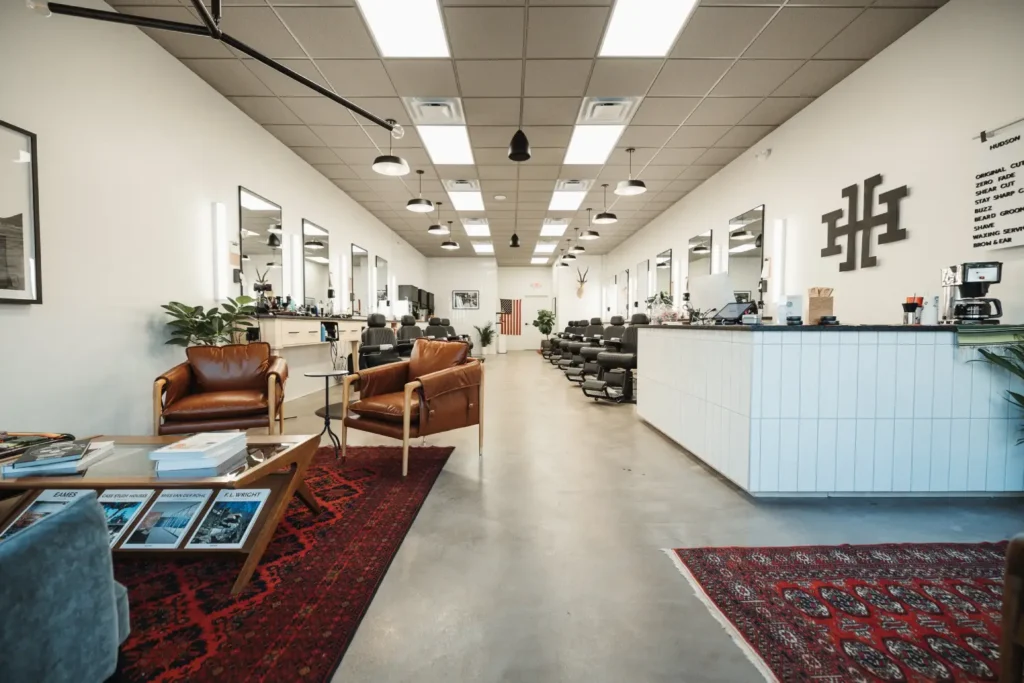
Located on the south side of Tulsa at 10031 S. Yale Ave., Suite 102, Hudson Hawk is a traditional neighborhood barbershop. We’ve been operating since 2013, with locations across Missouri, Kansas, Arkansas, and Oklahoma. Our reputation didn’t get built overnight, and our Tulsa shop holds to the same standard — precision cuts, knowledgeable barbers, and the kind of unhurried atmosphere that makes a haircut feel like time well spent rather than something to check off a list.
Ready to schedule an appointment? Just call 539-202-3301 or book an appointment online.
The Bottom Line on Tulsa
Tulsa rewards curiosity. The city has more going for it than its reputation suggests — world-class museums, a legitimate food scene, great music, genuinely beautiful architecture, and outdoor space that makes daily life here feel easy. It’s the kind of city that earns regulars: the people who come once for business and keep finding reasons to come back.
When you go, give yourself more time than you think you need. You’ll use it.
Before you go, take a look at our other neighborhood guides — each one covers the best local spots to eat, shop, and explore, plus where to find your nearest Hudson Hawk shop.